
When it comes to emergency preparedness, having the right first aid kit can make the difference between a minor inconvenience and a life-threatening situation. We recently had the opportunity to thoroughly test and evaluate the SurviveX Large First Aid Kit.
My wife and I are both preppers, continuously working to improve our readiness for various emergencies. She is a registered nurse with specialized training in wound care, bringing valuable medical expertise to our preparedness efforts. Together, we approached this review by combining practical preparedness strategies with a professional medical perspective to ensure comprehensive insight.
The SurviveX Large First Aid Kit (also available at Amazon), and positions itself as a comprehensive solution for families, outdoor enthusiasts, and preparedness-minded individuals. With over 240 pieces and TSA/HSA approval, it delivers professional-grade medical supplies in an organized, accessible package.
After extensive hands-on testing and demonstrations, here’s what we discovered.
Reference the above video for more details
What’s Inside the SurviveX Large First Aid Kit
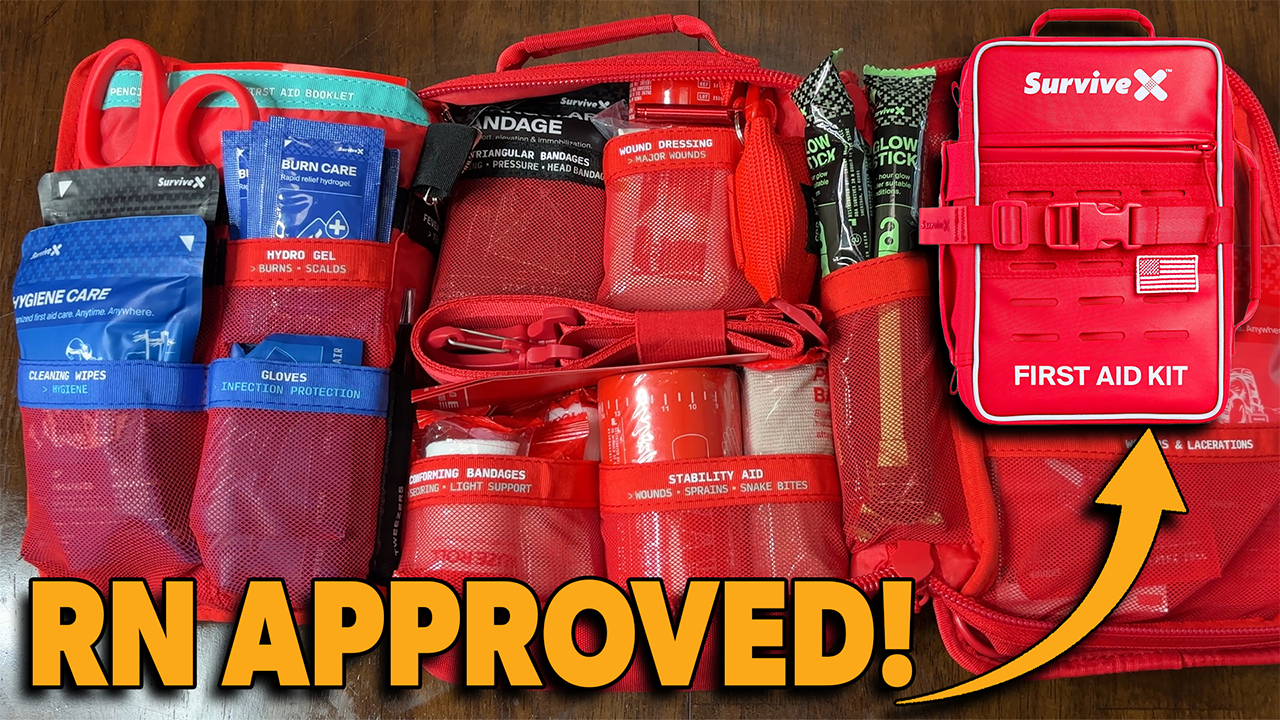
The SurviveX Large First Aid Kit arrives in a durable 900D, MOLLE-compatible bag with color-coded compartments that immediately set it apart from generic Amazon kits.
The organizational system uses clearly labeled sections that allow you to quickly locate specific supplies during high-stress situations—a feature that cannot be overstated when seconds matter.
The kit includes a comprehensive range of supplies covering wound care, trauma response, burn treatment, and basic medical instruments. From a wound care nursing perspective, the quality of the bandages, gauze, and medical tape meets your preparedness needs.
These aren’t the flimsy adhesive strips you’d find in a dollar store kit—they’re well-made supplies that will stay in place and protect wounds effectively.
Notable inclusions are the Zip Stitch wound closures and an 18-inch splint, both of which we discuss and demonstrate in the video above. The kit also contains sterile gauze pads in various sizes, medical tape, trauma shears, tweezers, a CPR face shield, cold packs, and basic medications, including pain relievers and antihistamines.
For a family of 3-4 people, this is a solid foundation and a comprehensive first aid kit for handling common emergencies and injuries.
Testing the Zip Stitch Wound Closure System

One of the standout features of this kit is the inclusion of Zip Stitch closures and Steri-Strip type wound closure strips.
These are an innovative alternative to traditional sutures, allowing laypeople to close wounds effectively without medical training. During our testing, we demonstrated the proper application technique and evaluated its practicality for emergency situations.
Zip Stitch devices use adhesive strips and adjustable tensioning mechanisms to bring wound edges together, mimicking the function of sutures without needles or threading. From a wound care perspective, these are genuinely useful for lacerations that are too deep for butterfly closures but don’t necessarily require emergency room sutures.
The application process is straightforward: clean and dry the wound area, apply the adhesive strips on both sides of the laceration, and use the zip mechanism to gradually close the wound edges. The key advantage here is that even someone with minimal medical training can achieve effective wound closure in a field environment where professional medical care isn’t immediately available.
However, it’s crucial to understand the limitations. Zip Stitch is not appropriate for all wounds. Deep puncture wounds, wounds with significant tissue loss, heavily contaminated wounds, or injuries over joints would require different procedures. They should be evaluated by medical professionals whenever possible.
But for clean lacerations in low-movement areas, Zip Stitch provides an excellent interim solution until professional care is available.
The 18-Inch Splint: Essential for Fracture Management

The included 18-inch malleable splint proved to be one of the most versatile components in the kit. Unlike rigid splints that work only on specific body parts, this aluminum splint with foam padding can be shaped to immobilize injuries to fingers, forearms, ankles, or legs.
During our demonstration, we showed proper splinting technique for a suspected wrist fracture—a common injury in both wilderness and urban emergency scenarios. The splint’s flexibility allows you to mold it to the natural position of the injured limb, which is critical for preventing further damage and reducing pain during transport.
From a preparedness standpoint, having a quality splint readily available is non-negotiable. Improvising splints from sticks and duct tape works in a pinch, but a proper medical splint provides superior immobilization and patient comfort. The 18-inch length can be cut smaller to handle most extremity injuries for adults and children, making it an excellent addition to a family-oriented kit.
The foam padding prevents pressure points and skin irritation—details that matter during extended care situations when evacuation to professional medical facilities may be delayed. Whether you’re dealing with a hiking accident miles from the trailhead or a home injury during a natural disaster when emergency services are overwhelmed, this splint delivers professional-level fracture stabilization.
Israeli Battle Dressing (Extra Addition to Kit)

The Large SurviveX first aid kit we tested doesn’t include an Israeli Battle Dressing like the Large Pro First Aid Kit does, but it does include two medium pressure dressings that work the same way. We tested an expired battle dressing just to demonstrate how well first-aid supplies hold up over time and to show the proper application technique.
Perhaps the most important component from a trauma care perspective is the Israeli battle dressing. Originally developed for military use, this emergency bandage has become the gold standard for controlling severe bleeding in field environments.
The Israeli bandage combines multiple functions into a single device: a large absorbent pad, an elastic wrap, and a pressure applicator. During our demonstration, we showed how the unique pressure bar design could allow even a single person to apply direct pressure to a bleeding wound while maintaining that pressure with the wrap—something that’s nearly impossible with standard gauze and tape.
From a wound care nursing perspective, the Israeli bandage addresses one of the biggest challenges in emergency hemorrhage control: maintaining consistent, adequate pressure. The built-in pressure applicator can be positioned directly over the wound site, and the self-adhering elastic wrap secures everything in place without requiring additional hands or materials.
This is particularly valuable in preparedness scenarios where you may be treating injuries alone or with minimal assistance. Whether dealing with deep lacerations from tools during disaster recovery, traumatic injuries in remote locations, or severe bleeding from accidents, the Israeli battle dressing provides professional-level hemorrhage control that can genuinely save lives.
Real-World Preparedness Applications
The SurviveX Large First Aid Kit is an essential component for anyone looking to enhance their preparedness strategy in various emergency situations. Whether you’re planning a family camping trip, navigating outdoor adventures, or simply ensuring your home is ready for unexpected events, this kit can be a game-changer.
It offers a comprehensive range of medical supplies designed to handle a variety of injuries and ailments. From burns, cuts, and bruises to more serious situations requiring immediate attention, having a well-stocked first aid kit can make all the difference.
Home Emergency Preparedness: For families building comprehensive emergency supplies, this kit provides excellent coverage for the most common injuries and medical situations you’ll encounter. The 240+ pieces mean you can handle multiple incidents without immediately depleting your supplies—a critical consideration when disaster scenarios may prevent resupply for days or weeks. The organized compartments make it easy for any family member to locate and use supplies, even under stress.
Vehicle Emergency Kit: The MOLLE-compatible bag and TSA approval make this kit ideal for vehicle storage. Whether mounted in your trunk, strapped under a seat, or integrated into a larger vehicle emergency system, it stays organized and accessible. You could also include trauma supplies, such as the Israeli bandage, which is particularly relevant for automotive emergencies where high-energy impacts can cause severe bleeding.
Camping and Outdoor Activities: For wilderness enthusiasts, this kit strikes an excellent balance between comprehensive coverage and reasonable weight. The splint, Zip Stitch, and burn care supplies address the most common serious injuries in backcountry environments. The high-quality construction provides peace of mind when crossing streams or during unexpected weather. The organizational system means you’re not dumping out your entire kit to find a specific bandage at a remote campsite.
Travel: TSA approval is a significant advantage for frequent travelers. Having professional-grade medical supplies in your luggage provides peace of mind, whether you’re on domestic trips or international adventures where local medical supplies may be questionable. The compact design means it doesn’t consume excessive luggage space, and the HSA-eligible purchase allows you to purchase it with pre-tax healthcare dollars.
Recommended Additions for Enhanced Preparedness
While the SurviveX Large First Aid Kit provides excellent baseline coverage, serious preppers and those building comprehensive medical capabilities should consider several additions:
Tourniquet: The most notable omission is a proper tourniquet. While the Israeli bandage handles most bleeding scenarios, severe extremity hemorrhage from traumatic injuries requires a windlass tourniquet, like a CAT. This is non-negotiable for true trauma preparedness. Cost: $25-30.
Hemostatic Gauze: QuikClot or similar hemostatic agents dramatically improve bleeding control for wounds that can’t be tourniqueted. This is especially valuable in junctional areas such as the groin or armpit. Cost: $20-30 per package.
Chest Seals: For penetrating chest injuries, specialized vented chest seals prevent life-threatening complications. While hopefully rarely needed, they’re lightweight and potentially life-saving. Cost: $10-15 per seal (carry two).
Additional Medications: Depending on your family’s needs, consider adding prescription medications (EpiPen for allergies, inhalers for asthma), anti-diarrheal medications, and additional pain relievers. Consult your physician about emergency prescription supplies. SurviveX also sells a Trave RX kit with quite a few OTC medication packets.
Final Verdict: Is the SurviveX Large First Aid Kit Worth It?
From both preparedness and medical professional perspectives, the SurviveX Large First Aid Kit represents excellent value for individuals and families serious about emergency readiness. The combination of high-quality medical supplies, intelligent organization, and professional-grade components, such as the compression dressings and Zip Stitch closures, sets it apart from basic consumer kits.
The kit’s versatility across home, vehicle, camping, and travel scenarios makes it a smart investment rather than a single-purpose purchase. The TSA approval and HSA eligibility add practical value that extends beyond just the medical contents. I don’t recommend too many pre-made first aid kits, but this is one you will not be disappointed in.
Discover more from Survivalist Prepper
Subscribe to get the latest posts sent to your email.
