
Read this and get an excellent recipe for wild game and an efficient way to process meat for your family. Continue reading and you will also get some relatively bloody images of a dead animal. If you cannot handle that then stop reading and grow up. Go buy your meat in plastic wrappers like everyone else. Just pray that the grocery store is still there when you need it. These posts are for big people who live in Realville. We are not ashamed or afraid. If any of this offends anyone, Good!
Preparing is surviving. Being prepared means going above and beyond the daily habits of the masses around the globe. Many wise preps are based on re-learning skills that were once daily routine of our forefathers. One of the basic skills is preparing food. Specifically, a valuable skill for Native Americans and Settlers was the ability to prepare wild game for consumption. The tradition of hunting and preparing of wild game was seen as a noble undertaking. Each animal taken was treated with tremendous respect and every part was used in maximum efficiency.
Fast forward less than one hundred years and the vast majority of USA citizens rarely consider where their food comes from. Even fewer people know how to properly locate, harvest, and prepare wild animals for human consumption. Consider these valuable lessons learned from processing your own food:
- A deeper appreciation of the precious life of every animal.
- Knowing exactly where your food comes from and what is in it.
- Less dependency on established food sources for the masses.
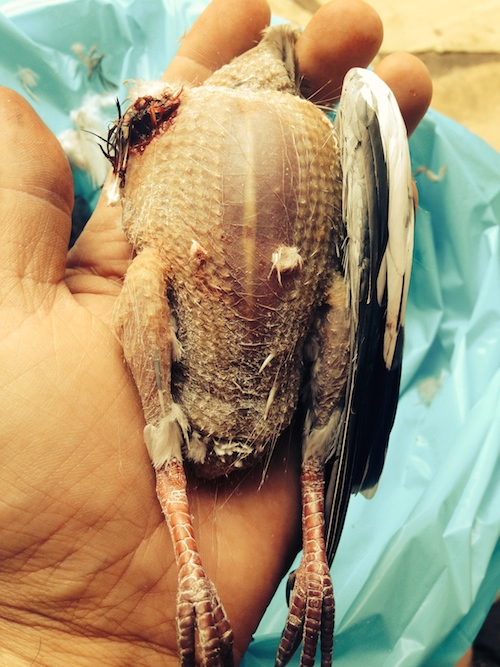 The work of game bird processing is not a pretty sight. It is dirty, bloody, and often stinky. The truth is that any and every piece of meat that every human consumes is processed in this same manner. It is also true that your method of processing is likely cleaner, more humane, and safer than mass production processes. This post is on how to prepare and cook game birds. Specifically, we use a White Wing Dove for this post. Here are some basic tools for processing your bird:
- Small but sharp knife. A 2.5 inch blade will do the job nicely.
- Pan of clean water for washing of meat and knife.
- Trashcan lined with disposable trash bag for disposal of unused animal pieces.
- Ziploc type freezer bag for storage.
The lazy way to clean a dove is to rip the breast out and throw the rest away. That method is contrary to the ancient traditions of using as much of an animal as possible. It is also wasteful because there is left over edible items that are not used. The more efficient, respectful, and proper way to begin cleaning your bird is to pluck the feathers from the bird. Place the dove over the trash can. Pull the feathers from the bird and discard. Stay over the trash can as this can get messy. Do not do this in windy areas. Remove all large and small feathers up to the neck and out to the second joint on the bird’s wings. There is not enough meat on the outer wing of a bird to warrant keeping it. Be sure to remove the “pin feathers” too. These are the small black tube like feathers that often stay intact during plucking.
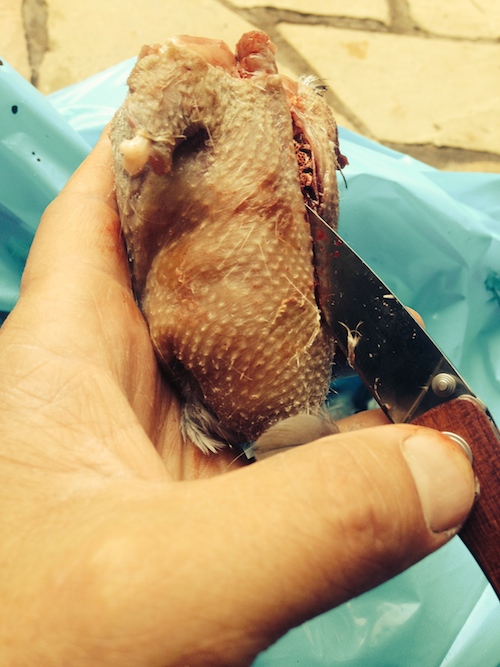
Once you have plucked the bird, remove the head, feet, wings, and internal organs. Do not attempt to cut through solid bones. Locate a joint and move your blade between the joint’s connecting tissue. This should make a clean cut without too much effort. Once you have removed the outer extremities, you should have a relatively clean-looking carcass with no feathers intact. Place the bird facing downward with the spine of the bird facing up. Run your knife along the backbone of the bird from end to end. This will split the bird open and it should look like a smaller version of a whole chicken that you see in the grocery stores. The splitting down the back opens of the organ cavity for you to easily and cleanly remove the internal organs. Note: The heart and gizzard are edible. The heart needs only a rinsing. The gizzard must be sliced down the center and cleaned from the inside. These internal organs are popular for stews and Louisiana style gumbo.
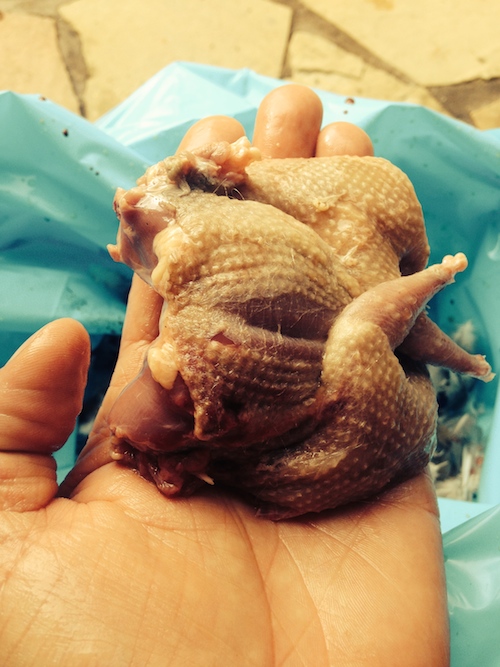
Once you’ve split the bird and removed the organs, it is time for a rinse. Rinse the bird thoroughly while rubbing your fingers over the entire carcass. This process should remove any remaining feathers from the skin and any remaining internal items from the inside. Leave the skin of the dove intact. The skin provides just a bit of fatty tissue which keeps the meat from drying out and provides flavor when cooking. If you do not plan to cook the bird immediately, store one or two doves in a quart sized freezer bag. They will keep for several weeks to 3 months.
Check out this traditional Louisiana Cajun Dove in Red Wine Sauce with Rice and Gravy!
2 Doves
1/2 Cup Red Wine or Sherry Wine
1.5 Cups Chicken Broth
Garlic, Salt, Pepper o r Cajun Seasoning
1/2 Bell Pepper
2 Medium Size Tomatoes
1/4 Cup White Flour
Butter
1/2 Cup Green Onion Tops
Season doves, roll in flour then brown in skillet for about 30 minutes on medium heat. Remove doves, add vegetables to pan and saute until tender. Add the chicken broth and the doves and simmer on low heat for about 45 minutes. Add the red wine and let simmer for about another 30 minutes. Gently stir about every 15 minutes. This process should create a nice dark liquid in the bottom of the pan around the doves.
Serve the doves over a bed of rice and lightly covered in the gravy from the pan. A nice side item is yellow corn or peas. The legs of the doves are most tender and flavorful. The breast will be slightly more dense in texture but very tasty! This recipe works well for other small domestic or game birds like quail, small ducks, Cornish hens, etc.
You can find ten more Dove recipes on Cooks.com.
Read more about Bennett.
Discover more from Survivalist Prepper
Subscribe to get the latest posts sent to your email.
