
There is no substitute for real-world testing. Survival Gear Tests is a series of blog posts about survival gear in real world conditions. A mostly off-pavement motorcycle adventure for 12 days, 2500 miles across America’s back country via the Continental Divide pushed machine, gear, and man to the limit. Each post will be on a specific piece of gear which could make or break your bug out effort. We hope that you use my embarrassment, mistakes, struggles, and success to improve your own adventure experience. I am not a pro and nobody paid me to  write these posts. That will be incredibly obvious as you read about my experience. This post is about the backpacking tent.
Tents come in countless sizes and shapes. Since this is all about bugging out or maybe back country adventure, we must narrow this discussion to the backpacking tent. This type of tent is different from other types of tents size, weight, and ease of use. A great bug out tent offers the same qualities as a great back packing tent in these ways:Light and small enough to carry in your pack.
- Sturdy enough to withstand rough weather.
- Low maintenance enough to be erected in the dark or in a rainstorm.
- Light enough to be carried in your pack.
- Concealable.
On a recent 2500 mile motorcycle tour through the back country, I put my tent through some tough testing. I needed a tent to keep the rain, bugs and bears out, and the warmth in. Only a fool would think a tent would keep the bears out but what you cannot see cannot hurt you right? Aside from bears, my MSR Hubba Hubba went would have been excellent but that was not my choice. I instead chose a smaller, single man tent that packed down to the size of a two liter bottle and weighed almost nothing. The consequences of my weight weenie foolishness were clear from day one. Just read further and laugh at my rookie mistakes.
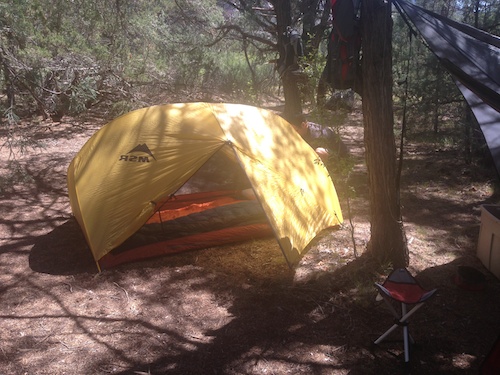
A low maintenance tent is mandatory. When you are exhausted or when it is raining or when it is dark outside, you need the easiest shelter possible. A tent that requires more stakes than necessary to hold itself in place is not a problem in your back yard but it is a massive PITA in the deep woods of Montana. A tent with complicated poles and zippers offers equally annoying experiences. Avoid any tent that is not stand alone. This means that the tent must stand up by itself without the need for tents or guide wires. It should stand up using only the poles. One dark and stormy night, this fact became incredibly clear as one of the stakes of my tent slipped and the entire thing came crashing down on my head. Try something like the MSR Hubba Hubba or others like it as it offers all of the mandatory elements.
Beware of ultra light weight tents. There are only so man grams that you can shave off of a structure before it becomes flimsy or even unsafe. A good bug out tent will offer a “bathtub” type flooring that contains an extra layer of material to keep the water out even when the water is pooling up around you. This extra floor layer will also be more resistant to punctures from rocks and twigs. The rain fly must have taped or otherwise water resistant zippers to keep the raindrops off of your head. Remember that nothing is waterproof. Anyone that lives in places like Louisiana with high humidity will know what I mean. Never touch the inside of a damp tent as the water will often seep through from outside in. Ask me how I know!
Finally, the two man tent offers extra space to store your gear or your bug out partner in an emergency. There are many reasons you want to store your gear inside the tent. Snakes, bugs, scorpions, spiders and countless things that bite and sting love warm, dry, dark places that your shoes and boots offer. Deer love the taste of sweat on your socks and clothes if left outside for easy access. There is always the chance that an unexpected midnight rain storm can drench anything left outside. On a 7 day bicycle tour through Mississippi, Alabama, and Tennessee, I lost my tent poles somewhere near the Alabama/Tennessee border. Thank goodness that my touring buddy was smart enough to ring a two-man tent and offer me a refuge from the massive rainstorm.

Extra weight matters. You get what you pay for. A good quality tent will not be the lightest thing in your pack but it should also not be the heaviest. Remember that the tent poles and stakes count for weight as well. Choose from reputable gear makers like MSR and REI for confidence that you are getting great quality and good prices with low weight penalty.
If you are buying your tent for bug out purposes, consider the color of your shelter. Popular colors for adventure gear seem to be high viz colors like orange, green, and yellow. In a bug out situation, you do not want to be seen. Pick a tent in olive drab color or other earth tones for concealment.
Hammocks and tarps are also popular back country shelters. Each has its positive and negative qualities. Hammocks are incredibly comfy but cold due to lack of insulation below. It can also be a challenge to find a place to hang a hammock in some areas. Sil tarps are excellent rain shelters and low maintenance but you will not keep the mosquitoes and other critters out.
What is your back country shelter preference?
Check out Bennett’s comments on Concealed Carry Handguns.
Discover more from Survivalist Prepper
Subscribe to get the latest posts sent to your email.

2 replies to "Survival Gear Tests – The Backpacking Tent"
Eureka timberline. They never die.
These backpacking tents are the best option for making shelter because of their water proof, easy to install and comfortable properties. If you have the tent then you do not need any other things to create the shelter in survival conditions.